New
New containers
A logical choice if a neat appearance and a longer initial CSC validity are important.
A CSC certificate for a sea container is especially relevant when the container is used for international transport. For a storage container on-site, a CSC certificate is usually not required. On this page, you can read when a CSC certificate is necessary, what the CSC plate says about the current CSC status of the container, and what the difference is between new containers, used A-grade, and storage-oriented used containers.
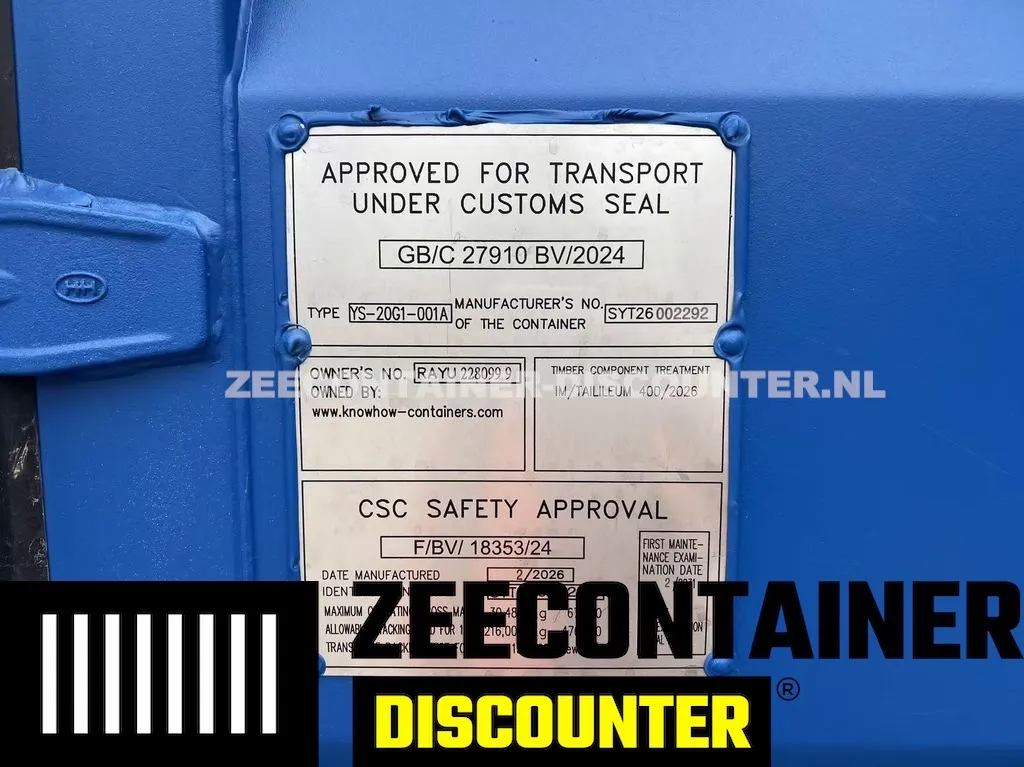
CSC in the picture
For on-site storage, the physical condition of the container is usually more important than the CSC. If the container is used for international transport, the current CSC status of a CSC-certified container is relevant. Therefore, it is wise to mention container certification for transport early in your request, especially for used containers.
Practical application determines whether CSC plays a major role: on-site storage requires something different from international transport.
CSC is often mentioned in connection with sea containers, but its relevance depends entirely on how you intend to use the container. Below are the key decision points.
The CSC certificate is relevant when a container is used for international transport. For storage on private property or at a construction site, a CSC certificate is usually not a requirement.
First, use the container's purpose as a decision point. For storage, primarily check for wind and water tightness, condition, and delivery. For transport, also check the current CSC status.
New one-trip containers generally have a longer initial CSC validity. Used containers may still have a valid CSC, but the remaining validity period is often shorter and must be checked for each specific container.
When making transport plans, do not rely on a general assumption. Always inquire about the current CSC status of the container you will actually receive.
If you need the container for transport, it is advisable to request the CSC plate or a copy of the certificate in advance. This prevents any ambiguity just before shipment or further logistical planning.
Include CSC directly in your request or quotation. This way, we can confirm in advance which container is suitable for your deployment.
For many storage applications, it is more important that a container is wind and watertight, closes properly, and fits logically in terms of size and delivery. CSC says less in that scenario than the actual condition and suitability for storage.
If you are mainly looking for a storage container, then used B-quality may be perfectly suitable without CSC being the decisive factor.
For international transport, you should check the current CSC status. For on-site storage, this is usually not necessary, and you mainly look at the condition, size, and delivery.
On or near the doors of a transport-ready container, you will normally find a CSC plate. This plate contains information about the container, such as identification, maximum weights, and relevant production dates or inspection information. For buyers, it is particularly important that this information matches the intended use.
If you only want to use the container as a storage container, the CSC plate is usually not the decisive factor. If you want to use a CSC-certified container for international transport, the current CSC status of the specific container must be suitable for that application. Therefore, inquire about this explicitly in advance.
CSC is rarely a stand-alone topic. It is related to usage, condition, choice between new or used, and the total logistical deployment of the container. Especially when a CSC certificate is required for a sea container, you must assess status, segment, and delivery together.
First, determine how the container will be used. For storage, CSC is usually not a requirement. For international transport, the container must be suitable for that purpose.
Avoid selecting on the wrong criteria. Use determines if CSC truly matters.
Read new vs usedYou must check CSC eligibility per container. Especially with used containers, the remaining validity period may differ from what you expect in advance.
Always ask for the current status or a copy of the relevant documentation in advance when making transport plans.
Request with CSC requirementNew containers are often the safest route when you want maximum lifespan and pristine condition. Used A-grade containers may still be suitable for transport. Used B-grade containers are more often chosen for storage.
Let quality and intended use together determine which segment is logical.
Read more about usedEven if CSC is relevant for you, delivery to the location remains a separate part of the total price. Please take into account transport, placement, and accessibility.
Don't just compare the container, but always the complete proposal including delivery.
View shipping ratesFirst determine the use, then check the current CSC status, and only then look at price and delivery in the correct segment.
Brief answers to the most frequently asked questions about CSC certification, transport, and storage use.
A CSC certificate is relevant when a sea container is used for international transport. In practice, you would check the plate or documentation of the specific container and its current validity for transport use.
For an on-site storage container, a CSC certificate is usually not required. In that case, you mainly look at size, condition, wind and watertightness, and delivery to your site.
A new one-trip container is often the most reliable route when longer validity and good condition are important. This often makes new more attractive when transport use is determined from the outset.
Yes, you can. However, with a used CSC-certified container, you must always check the actual status of the specific container, as the remaining validity may vary per container.
If you intend to use the container for international transport, please request the CSC plate or a copy of the relevant documentation in advance. This ensures that the container and documentation align with your logistical requirements.
When it comes to storage, the condition is usually more important. A container must close properly, be wind and watertight, and be practical to deliver. CSC is often not the decisive criterion then.
Go directly to new or used containers, compare new with used, or include delivery in your overall consideration.
New
A logical choice if a neat appearance and a longer initial CSC validity are important.
Used A
Interesting if you want to purchase more efficiently and transport suitability may still be relevant.
Comparison
Read on to find out whether new, used A, or used B is best for your storage, transport, and budget needs.
Delivery
Instantly see the cost of delivering your container based on country, postal code and container type.
Quotation
State directly whether CSC eligibility is part of your application, so that it can be selected accordingly.
Direct compare new containers, used A-grade, and the most popular sizes.
20ft High-Cube Shipping Container – RAL 6007 Green – New (CSC)
Unused container
Extra height
5 years from build date
20ft Shipping Container (Dry Van) – RAL 3020 Traffic Red – New (CSC)
Unused container
Standard height
5 years from build date
20ft Shipping Container (Dry Van) – RAL 9005 Black – New (CSC)
Unused container
Standard height
5 years from build date
4ft storage container 1530kg Load capacity – RAL 7016 Anthracite gray – New
Unused container
Standard height
Not possible
20ft Shipping Container (Dry Van) – RAL 5010 Blue – New (CSC)
Unused container
Standard height
5 years from build date
20ft Shipping Container (Dry Van) – RAL 6005 Moss Green – New (CSC)
Unused container
Standard height
5 years from build date